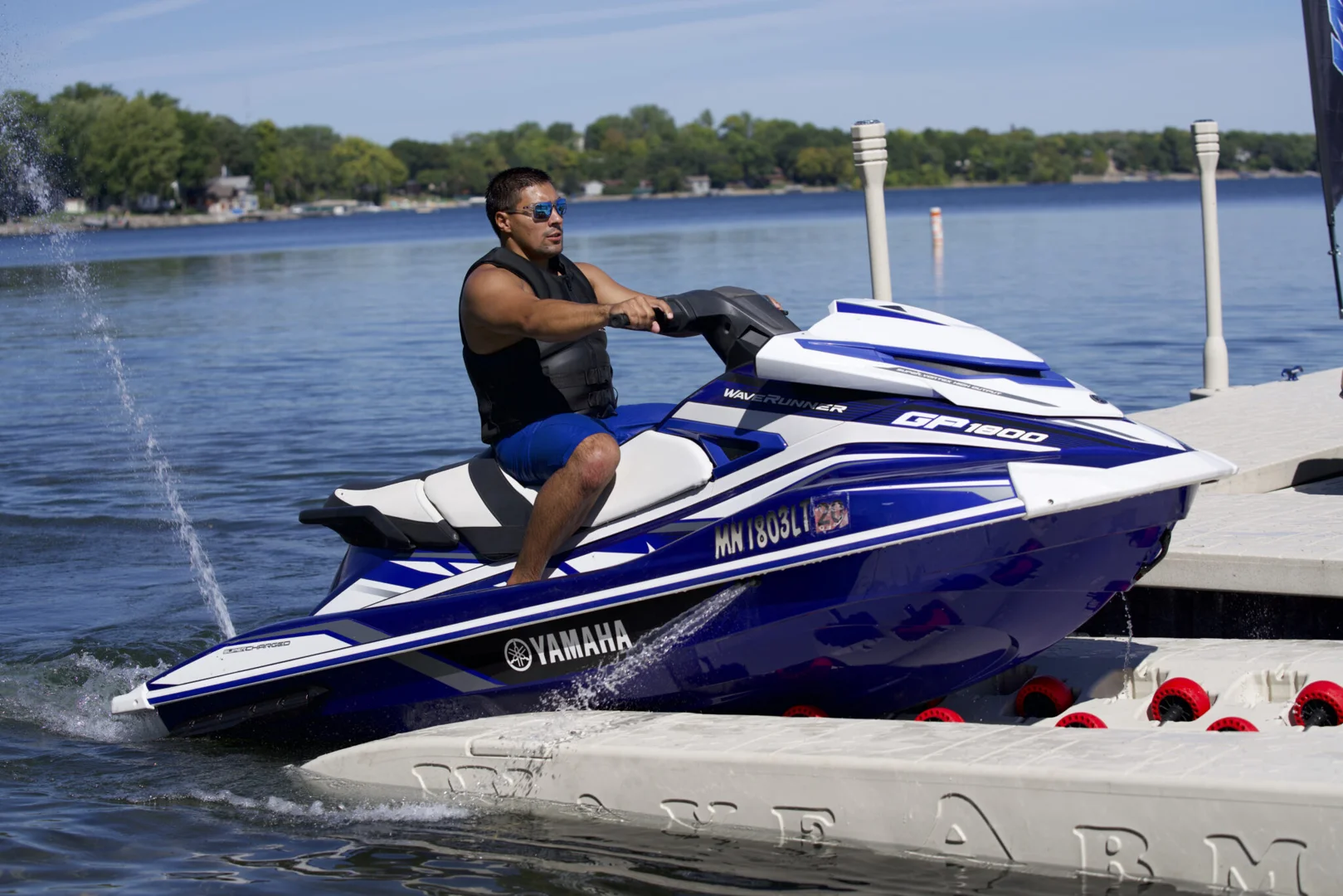
If you own two jet skis, a double floating jet ski dock for sale is one of the smartest upgrades you can make to your waterfront property. Instead of leaving your PWCs sitting in the water – where hull damage, algae, and intake fouling are constant risks – a double floating dock keeps both machines dry, secure, and ready to ride.
Here are the top double floating jet ski dock features to look for this season:
| Feature | What to Look For |
|---|---|
| Dock type | Rigid polyethylene or inflatable drop-stitch |
| Capacity | Typically 1,700 to 2,100 lbs per side |
| Launch style | Drive-on, roll-on, or slide-on access |
| Surface | Non-skid, self-bailing walking area |
| Hardware | Corrosion-resistant stainless steel components |
| Layout | Space-efficient dual parking with walk-around room |
| Installation | Anchoring suited to your shoreline and water depth |
The core appeal is simple. A dual dock shares one anchoring system and one platform for two watercraft. That means lower installation costs, less dock space used, and both machines launching at the same time. No trailer. No hassle.
These docks float with changing water levels automatically – no electricity, no motors, no moving parts to break. Whether you’re on a Georgia lake dealing with seasonal water fluctuations or a Florida canal managing daily tidal swings, a quality floating dock adapts to your conditions.
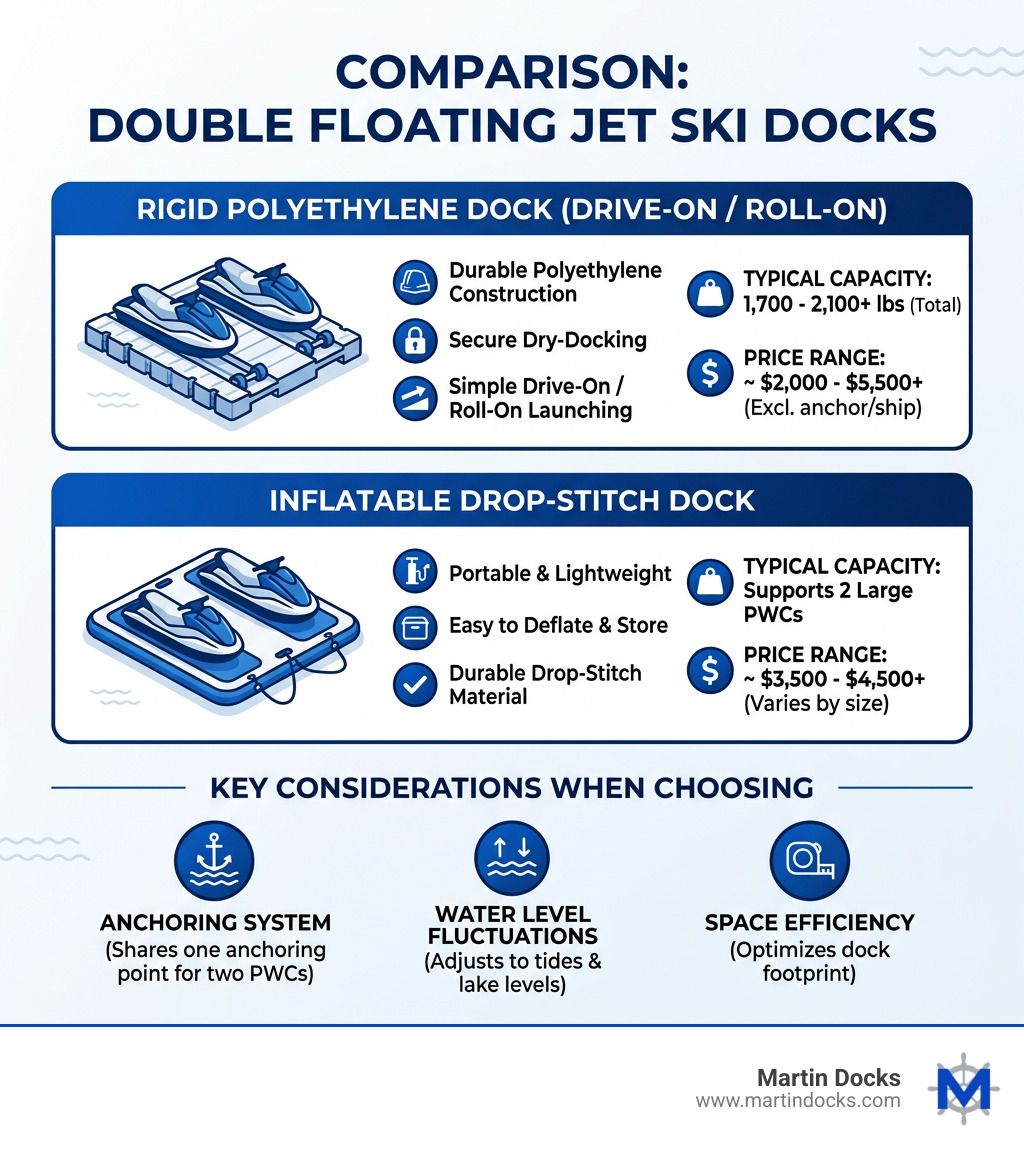
The two main categories are rigid polyethylene docks (durable, permanent-feeling, often with lifetime warranties) and inflatable drop-stitch docks (portable, lightweight, easy to store). Both have real advantages depending on your setup.
We’ll walk through the key differences, top features, and what to look for before you buy.
Investing in a double floating jet ski dock for sale isn’t just about convenience; it is about protecting your significant investment in your personal watercraft (PWC). When a jet ski sits in the water for extended periods, it faces risks like hull delamination and marine growth. By utilizing a dry-docking system, you ensure your hulls stay clean and your intakes remain free of debris.
Beyond protection, there is the undeniable benefit of space efficiency. A dual setup allows you to park two machines side-by-side or in-line using a single footprint. This is particularly valuable in tight residential canals or on lakes like Lake Lanier, where dock space and shoreline permits are at a premium. More info about PWC ports can help you understand how these systems integrate with your existing dock structure.
Launching becomes a breeze with these systems. Most high-quality models utilize drive-on mechanics, where the momentum of the craft carries it onto the stable platform. To launch, a simple push or a release of the bow line allows the PWC to glide back into the water. This simultaneous launching capability means you and a friend or family member can be off the dock and onto the waves in seconds, rather than taking turns at a single slip.
When you are browsing for a double floating jet ski dock for sale, you shouldn’t just look at the price tag. The engineering behind the dock determines how long it will last and how easy it will be to use.
The weight capacity is perhaps the most critical spec. Modern three-seater jet skis from brands like Sea-Doo, Yamaha, and Kawasaki are heavier than ever. You will typically see capacities ranging from 1,700 lbs for economy models to over 2,100 lbs for heavy-duty professional series docks. For example, the Wave Armor Pro Max 6 offers a 2,100 lb capacity, which is ideal for the largest luxury PWCs on the market. Dimensions also matter; a standard double setup might measure roughly 120″ wide to accommodate two 3-passenger skis with enough room for a central walking path.
Look for High-Density Polyethylene (HDPE). This material is the industry standard for a reason: it is incredibly durable, impact-resistant, and UV-stable. UV stability is vital in the Southern sun to prevent the plastic from becoming brittle over time. Many top-tier rigid docks are also foam-filled with expanded polystyrene (EPS), making them virtually unsinkable even if the outer shell is punctured.
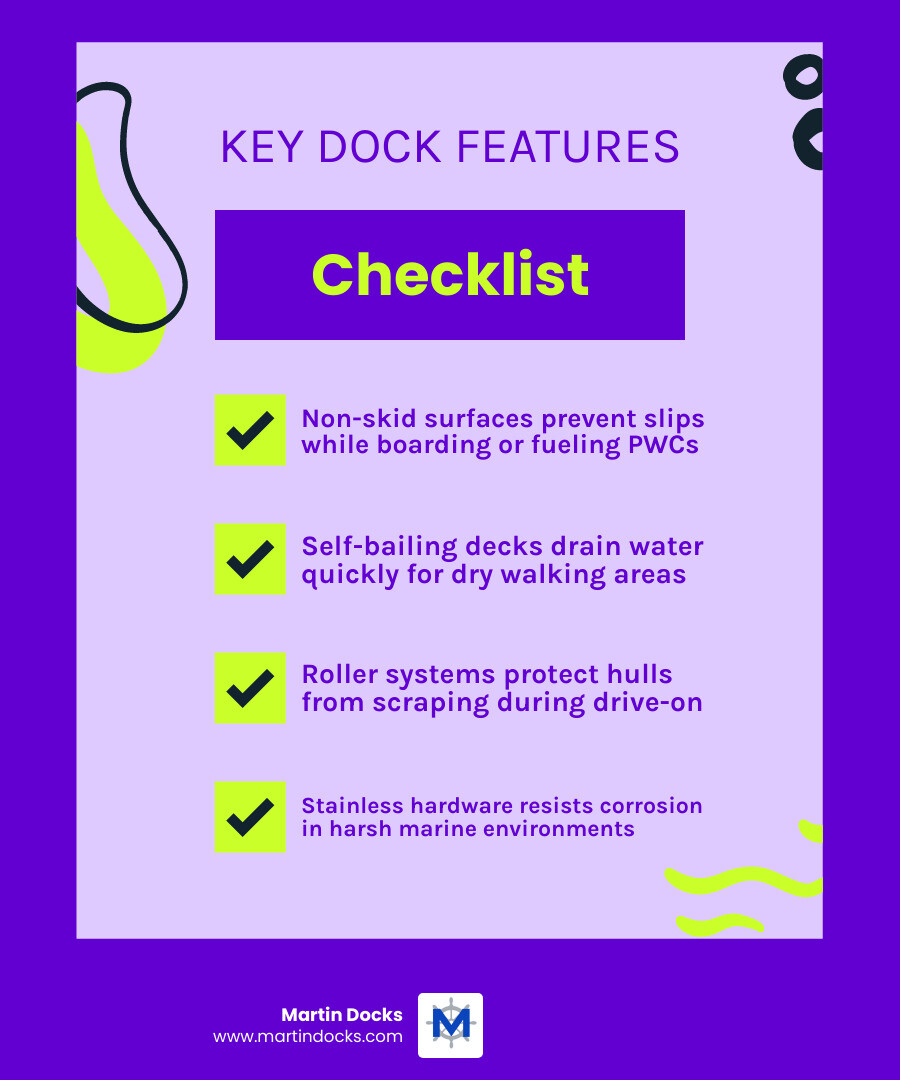
A high-performance dock should feature:
The market for a double floating jet ski dock for sale is split into two distinct philosophies: the permanent, heavy-duty rigid dock and the versatile, portable inflatable dock.
| Feature | Rigid Polyethylene Dock | Inflatable Drop-Stitch Dock |
|---|---|---|
| Material | HDPE / Foam-Filled | PVC / Drop-Stitch Fabric |
| Portability | Low (Semi-permanent) | High (Deflatable/Stowable) |
| Installation | Requires anchoring/piling | Hand pump or electric pump |
| Maintenance | Minimal (Pressure wash) | Requires drying before storage |
| Customization | Highly modular | Fixed sizes (some modularity) |
| Best For | Year-round residential use | Yachts, rentals, seasonal use |
Rigid docks are the “gold standard” for residential lakefronts. These systems are designed to stay in the water year-round. They offer a “static floating” experience, meaning they have no moving mechanical parts or electrical requirements. They rely entirely on buoyancy and physics.
One of the biggest perks of rigid docks is the warranty. Many manufacturers offer a lifetime limited warranty on the HDPE shells. Because they are modular, you can often expand them later if you decide to add a third jet ski or even a small boat. They handle the wear and tear of daily use exceptionally well and provide a very stable platform for boarding, even in choppy water.
Inflatable docks have surged in popularity, particularly for those who don’t want a permanent structure or for yacht owners who need a pop-up docking station. These aren’t your average pool floats; they use high-pressure drop-stitch technology. This involves thousands of polyester threads connecting the top and bottom layers, allowing the dock to be inflated to a rock-hard pressure, often around 200mm or 7.5 inches deep.
Inflatable double docks can offer features like:
For boaters who value portability and seasonal flexibility, inflatable docks can be a practical alternative to a permanent installation.
Installing a double floating jet ski dock for sale requires more than just tossing it in the water. Proper anchoring is the difference between a dock that lasts 20 years and one that drifts away during the first storm.
The right anchoring method depends on your specific shoreline and water conditions:
Floating docks are naturally resilient to waves because they move with the water rather than resisting it. However, in “rough water” configurations, you may need heavy-duty hardware and additional buoyancy modules. For those in hurricane-prone areas, one of the unsung benefits of modular polyethylene docks is that they can often be detached and moved to land in under an hour if a major storm is approaching.
Before purchasing, a site assessment is highly recommended. You need to verify the water depth (most drive-on docks need at least 2-3 feet of water to function properly) and check local permitting regulations. For those in North Georgia, we often assist with the permitting process to ensure everything is compliant with the US Army Corps of Engineers guidelines. If your current dock is looking a bit weary before the new port arrives, More info about dock repairs can help get your main structure ready for the upgrade.
Choosing the right double floating jet ski dock for sale is an investment in your lifestyle and the longevity of your watercraft. Whether you opt for the rugged, permanent reliability of a polyethylene drive-on system or the luxury portability of an inflatable drop-stitch platform, you are making the choice to spend more time on the water and less time dealing with trailers and hull maintenance.
At Martin Docks, we have been serving the lakes of North Georgia and Western North Carolina since 1956. From our bases in Gainesville and Hiawassee, GA, we’ve seen every type of water condition Lake Lanier and the surrounding areas can throw at a dock. We specialize in custom aluminum floating docks and high-quality PWC port installations that are engineered to last for generations.
If you are ready to upgrade your waterfront with a stable, easy-to-use dual jet ski dock, we are here to help with everything from site assessment and permitting to professional installation.
Explore our full range of docks and let’s get your jet skis out of the water and onto a platform that makes every lake day better.