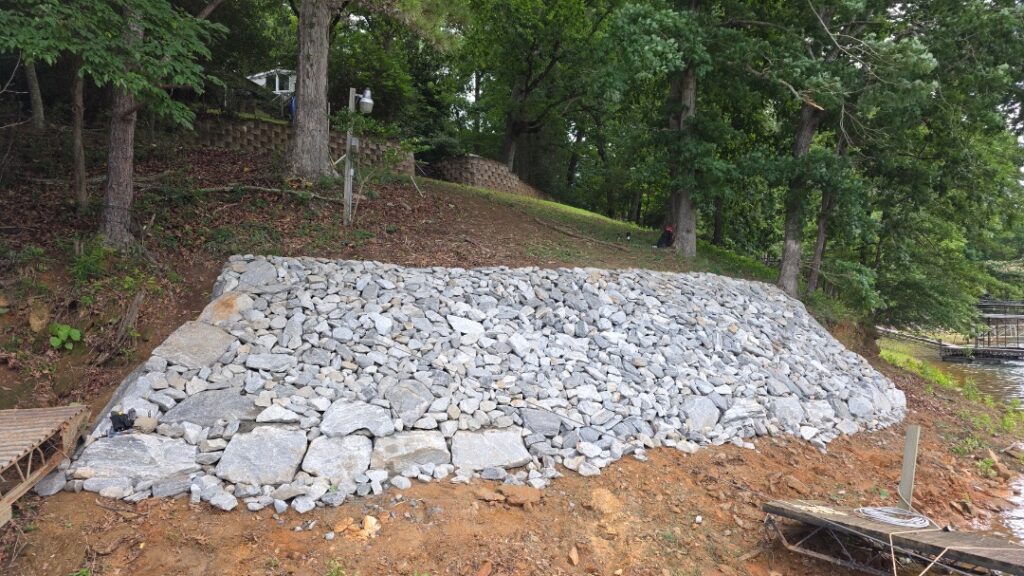
Riprap erosion control is the practice of placing large, angular stones along a shoreline, riverbank, or slope to absorb wave energy and prevent soil from washing away.
Here’s what you need to know at a glance:
Not all rip rap is built the same. Choose a team that understands permitting, proper installation, and long-term shoreline protection—so you only have to do it once.
Request A Shoreline EvaluationLearn More About Rip Rap from Martin DocksIf you own lakefront property, you’ve probably seen it happen — slowly at first, then all at once. Boat wakes chip away at the bank. Heavy rain carves channels through exposed soil. Water levels rise and fall with the seasons, and each cycle pulls a little more of your shoreline into the lake.
The damage isn’t just cosmetic. Unchecked erosion can undermine docks, destabilize slopes, and shrink your usable property year after year.
Riprap has been used for centuries as one of the most reliable answers to this problem. It’s practical, durable, and — when designed correctly — it works with the physics of moving water rather than fighting against it. In fact, roughly 10% of all quarry output in the United States goes toward riprap, reflecting just how widely it’s relied on across the erosion control industry.
This guide walks you through everything you need to know.
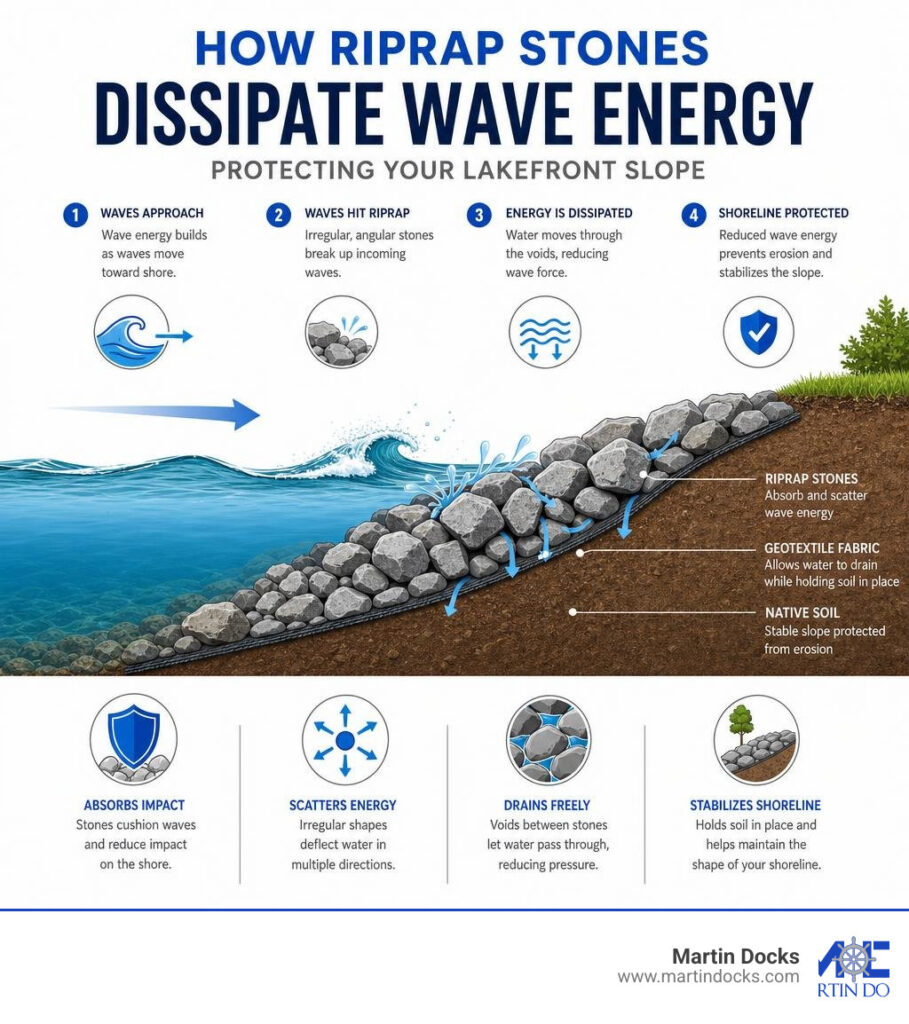
At its core, riprap erosion control is a structural defense system. Instead of trying to block the movement of water with a solid, rigid barrier, riprap works by absorbing and diffusing the water’s kinetic energy.
When waves or high-velocity currents strike a shoreline, they carry immense force. If that water hits bare soil, it easily detaches and carries away individual dirt particles. Riprap prevents this by acting as a heavy, durable “shield” or armor layer over the vulnerable earth.
According to the EPA’s Stormwater Best Management Practice for Riprap, this method is highly effective because it increases the “surface roughness” of the channel or shoreline. This roughness slows down the velocity of the runoff or waves. As water is forced to weave through the labyrinth of gaps between the stones, its energy is dissipated, reducing its capacity to scour the bank.
The secret to riprap’s performance lies in its structure. It is not just a pile of random rocks; it is a carefully graded mixture of interlocking angular stones.
While we frequently install riprap along lake shorelines on Lanier and Lake Chatuge, this technique is highly versatile. It is commonly used for:
Every shoreline is different—and so is the right solution. From hand-stacked granite rip rap to other shoreline stabilization options, we'll recommend what works best for your property. Our team will measure your Lake Lanier shoreline, create a custom plan that meets COE and TVA regulations, explain your options, and take care of the permitting so you can move forward with confidence.
Request A Shoreline EvaluationDesigning a riprap installation that lasts for decades requires careful engineering. Simply dumping rocks on a bank is a recipe for failure.
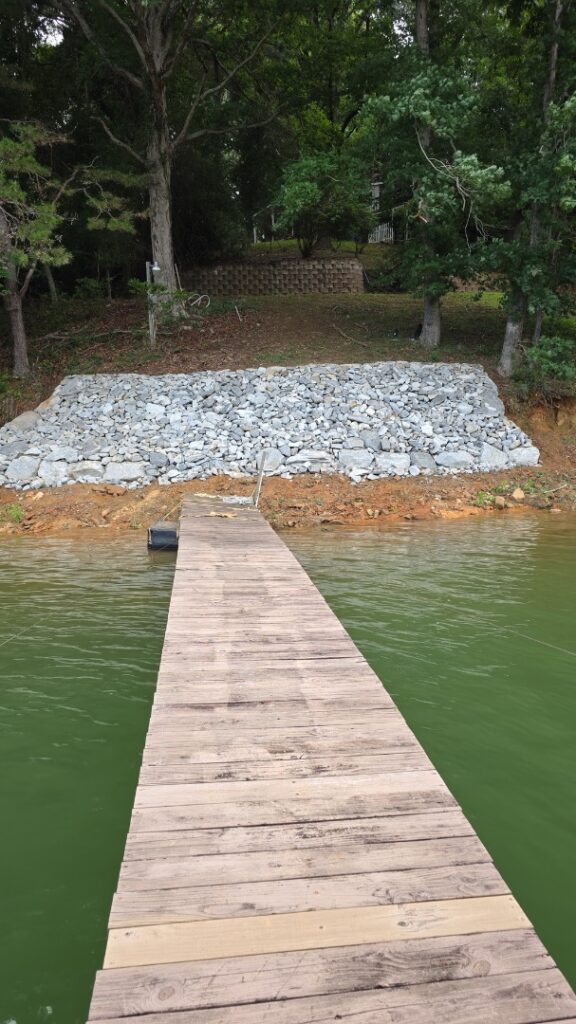
What lies under the rock is just as important as the rock itself. Without a proper filter layer, water washing through the gaps in the riprap will pull the fine soil particles out from underneath.
To ensure your riprap lasts for its full potential, we recommend the following maintenance routine:
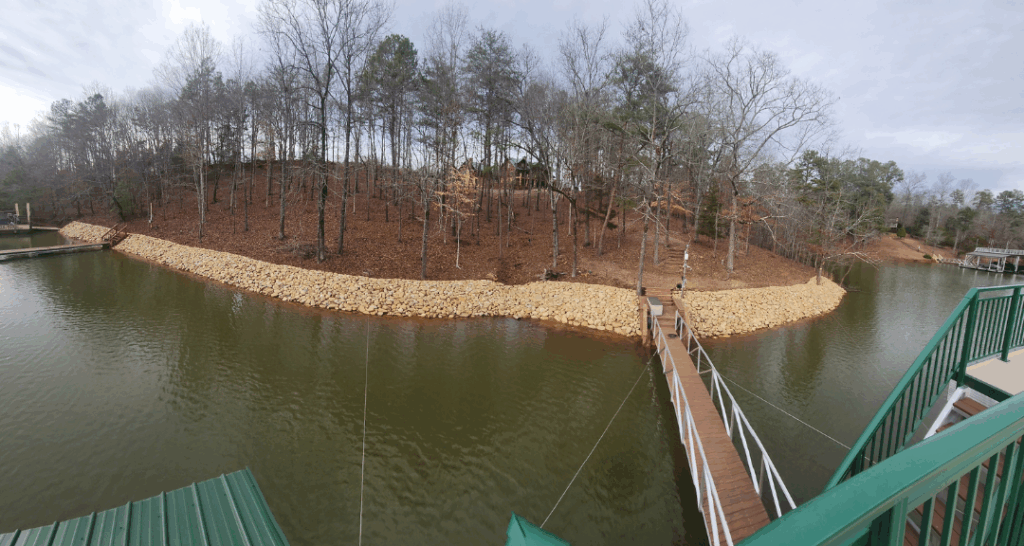
The cost of rip rap installation can vary significantly depending on site access, shoreline conditions, and the installation method. Just as important, the quality of the installation can make a major difference in how long your shoreline protection lasts.
The right installation can make all the difference. Our shoreline specialists will measure your property, design a solution that meets Corps of Engineers requirements, and build a shoreline that's designed to perform for decades.
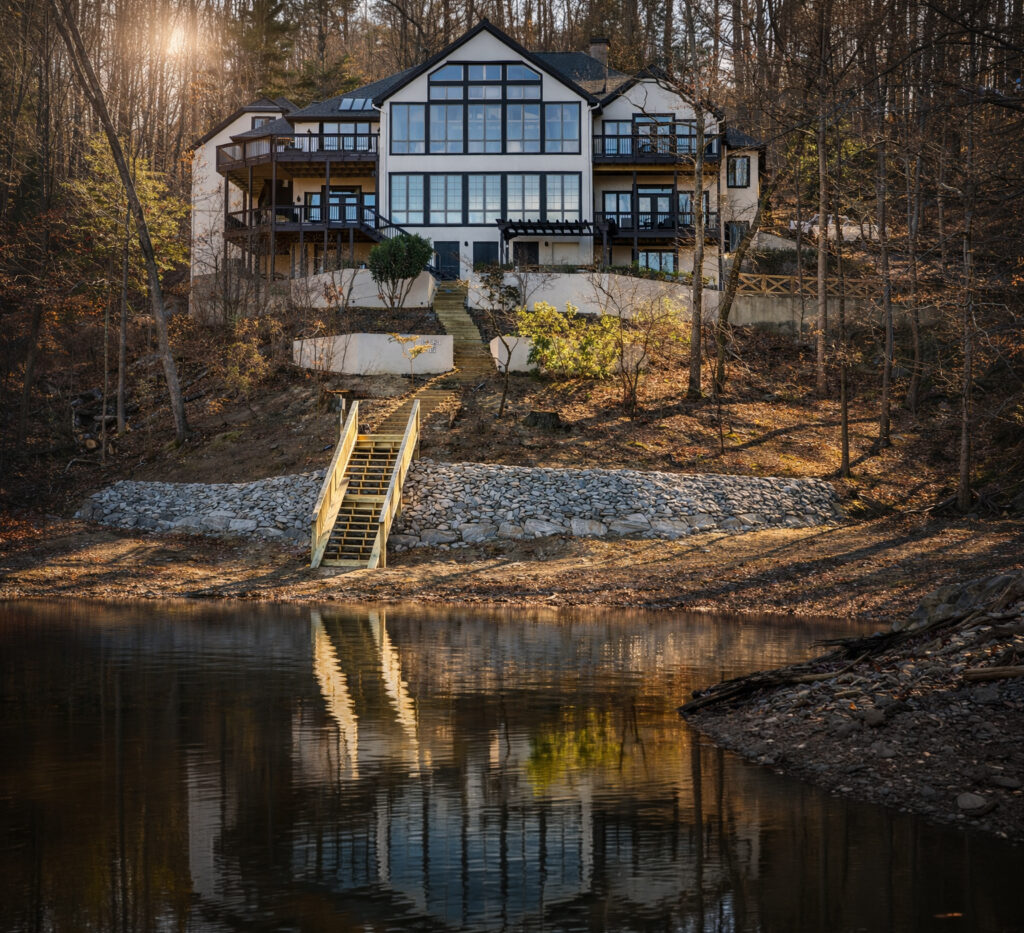
Request Your Custom Shoreline PlanWhen it comes to protecting your waterfront investment, riprap erosion control remains one of the most reliable, time-tested solutions available. By working with the natural physics of water rather than fighting against them, a well-designed riprap shoreline will safeguard your property from boat wakes, waves, and weather for generations.
At Martin Docks, we’ve been building and protecting shorelines across North Georgia and Western North Carolina since 1956. From our bases in Gainesville, GA, and Hiawassee, GA, we understand the unique soil conditions, water level fluctuations, and regulatory requirements of lakes like Lake Lanier and Lake Chatuge.
Whether you need a newly armored shoreline, custom riprap stair installation services for safe water access, high-quality custom floating boat docks, or reliable dock repair services, our team has the experience to get the job done right. We also offer specialized services to keep your waterfront in top shape, including:
Ready to stop the clock on your shoreline erosion? Contact us today to schedule your complimentary design consultation!
Rip rap erosion control is the process of placing large, durable stones along a shoreline to protect it from erosion caused by waves, boat wakes, changing water levels, and storm runoff. Properly installed rip rap helps stabilize the shoreline, reduce soil loss, improve drainage, and extend the life of your waterfront property.
The cost of rip rap installation on Lake Lanier varies depending on several factors, including the length and slope of your shoreline, site accessibility, the type and amount of stone required, permitting requirements, and the installation method. Every shoreline is unique, so Martin Docks provides on-site evaluations and custom estimates based on your property’s specific needs.
Yes. Most rip rap projects on Lake Lanier require approval from the U.S. Army Corps of Engineers before work begins. Martin Docks can help design your shoreline stabilization project to meet Corps requirements and handle the permitting process on your behalf.
In many cases, yes. Hand-placed rip rap allows each stone to be individually positioned for maximum stability, creating a stronger, longer-lasting shoreline with a more finished appearance. Machine-placed rip rap can be more economical initially but may be more susceptible to shifting over time depending on the site conditions.
Granite is the most commonly used material for shoreline stabilization because of its durability, weight, and resistance to weathering. It provides long-lasting erosion protection and maintains its structural integrity for decades, making it an excellent choice for waterfront properties on Lake Lanier and Lake Chatuge.
Yes. Professionally installed rip rap helps protect your shoreline from erosion while improving the appearance and long-term stability of your waterfront property. It can also reduce future maintenance costs and make your property more attractive to prospective buyers.
Yes. Rip rap can often be installed around existing seawalls, retaining walls, docks, and other waterfront structures to provide additional erosion protection. Every project is evaluated individually to ensure the installation works with your existing shoreline and complies with permitting requirements.
Yes. Martin Docks provides professional rip rap erosion control and shoreline stabilization services on Lake Chatuge and throughout North Georgia. Our team can evaluate your shoreline, recommend the best solution for your property, assist with permitting, and complete the installation from start to finish.