Finding a reliable dock builder on Lake Fontana is one of the most important decisions you’ll make as a lakefront property owner. This mountain reservoir is stunning — but it comes with real challenges that most lakes don’t have.
Here’s a quick overview of what to look for:
Fontana Lake covers 10,230 acres of water surface and 238 miles of shoreline, all tucked into the mountains of Western North Carolina. The lake is managed by the Tennessee Valley Authority (TVA) and sits behind Fontana Dam — the tallest dam east of the Rocky Mountains at 480 feet high.
That combination of size, terrain, and dramatic seasonal water level swings makes dock design here very different from a typical flatwater lake. A dock that works beautifully in July can be sitting on dry ground by January if it isn’t designed correctly.
The good news: the right dock builder understands all of this — and can design, install, and maintain a dock that performs year after year.
Selecting a Dock Builder on Lake Fontana isn’t just about finding someone who can swing a hammer; it’s about finding a partner who understands the unique “personality” of this reservoir. Fontana is not your average lake. With its steep mountain terrain and significant seasonal drawdowns, the engineering requirements for a stable, long-lasting dock are much higher than on many other Southeast waterways.
When we talk about Professional Floating Boat Docks Enhance Your Waterfront, we are referring to the seamless integration of a dock into its environment. On Fontana, this means the builder must be an expert in aluminum fabrication. Aluminum is the gold standard for mountain lakes because it offers incredible strength without the excessive weight of steel or the rot issues associated with wood.
Local expertise is non-negotiable. A builder needs to understand how to anchor a dock in deep water and how to manage gangways that must reach down steep, rocky shorelines. We often recommend looking at the Top 3 Ultimate Aluminum Floating Docks to see how modern materials can be customized to fit these exact conditions. At Martin Docks, we’ve been refining these designs since 1956, ensuring that every weld and every float is built to withstand the specific pressures of the Little Tennessee River valley.
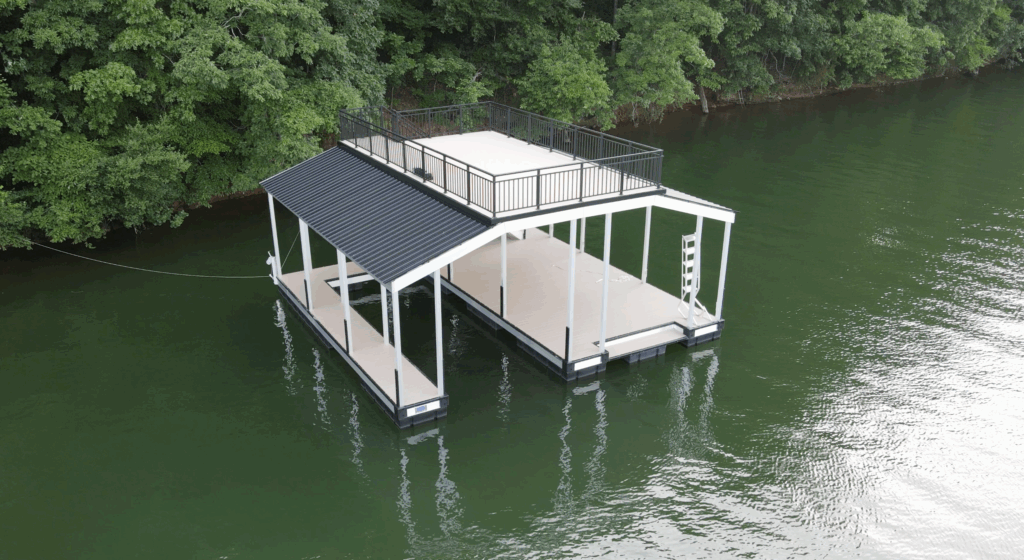
Your dock should be an extension of your home. Whether you need a simple single-slip for a fishing boat or a massive double-slip configuration for a pontoon and a ski boat, customization is key. Many homeowners on Fontana are now opting for sundeck roofs. These provide a second story of recreation space, perfect for taking in the views of the Great Smoky Mountains National Park that surrounds much of the lake.
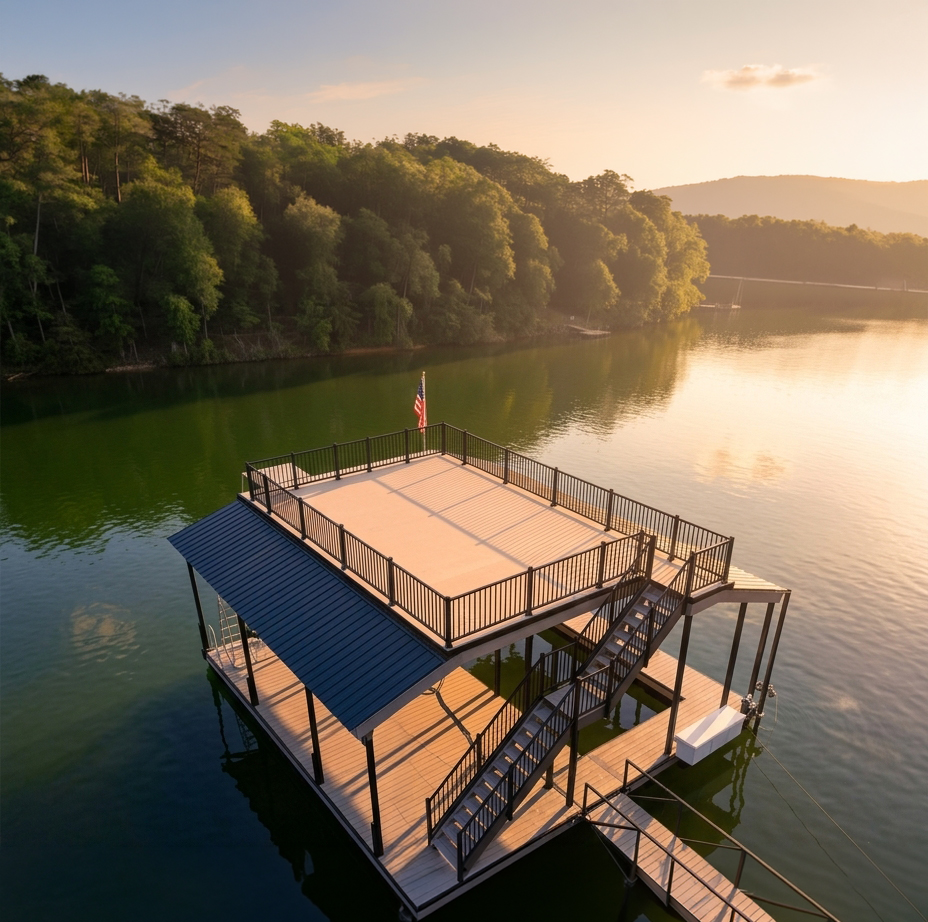
Your dock should be an extension of your home. Whether you need a simple single-slip for a fishing boat or a massive double-slip configuration for a pontoon and a ski boat, customization is key. Many homeowners on Fontana are now opting for sundeck roofs. These provide a second story of recreation space, perfect for taking in the views of the Great Smoky Mountains National Park that surrounds much of the lake.
Gangway length is another critical design factor. Because the water recedes so far during the winter months, your gangway needs to be long enough to remain functional without becoming dangerously steep. We often showcase these types of advanced designs at regional events, such as the 2026 Lake Lanier Boat Show at Lanier Islands, where we demonstrate how custom engineering solves the problems posed by fluctuating water levels.
Even the best-built dock requires upkeep, especially in a mountain climate. The freeze-thaw cycles and high-wind events common in Western North Carolina can stress hardware and flotation over time. A professional Dock Builder on Lake Fontana should offer more than just construction; they should offer peace of mind.
This is where “Dock Watch” programs become invaluable. These services involve regular inspections of your dock’s cables, winches, and floats. If a storm rolls through or the TVA begins a rapid drawdown, our team is there to ensure your dock is positioned correctly and safely. Regular hardware inspections can prevent minor issues from becoming major repairs. If you find your current structure is showing its age, we also specialize in Dock Repair on Lake Lanier and surrounding mountain lakes, bringing older docks back to modern safety standards.
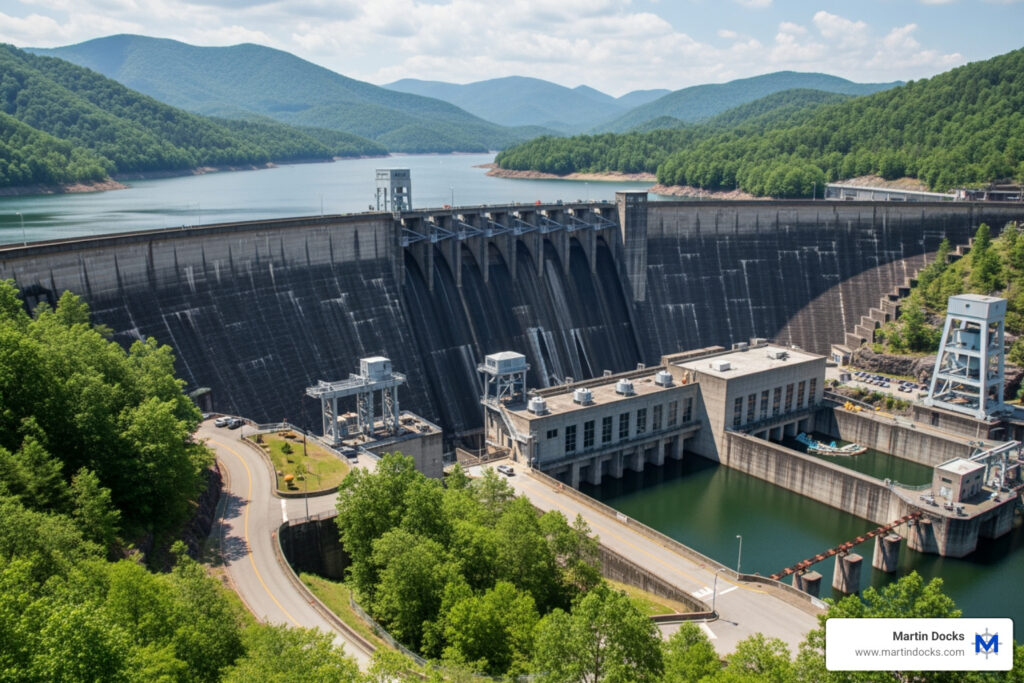
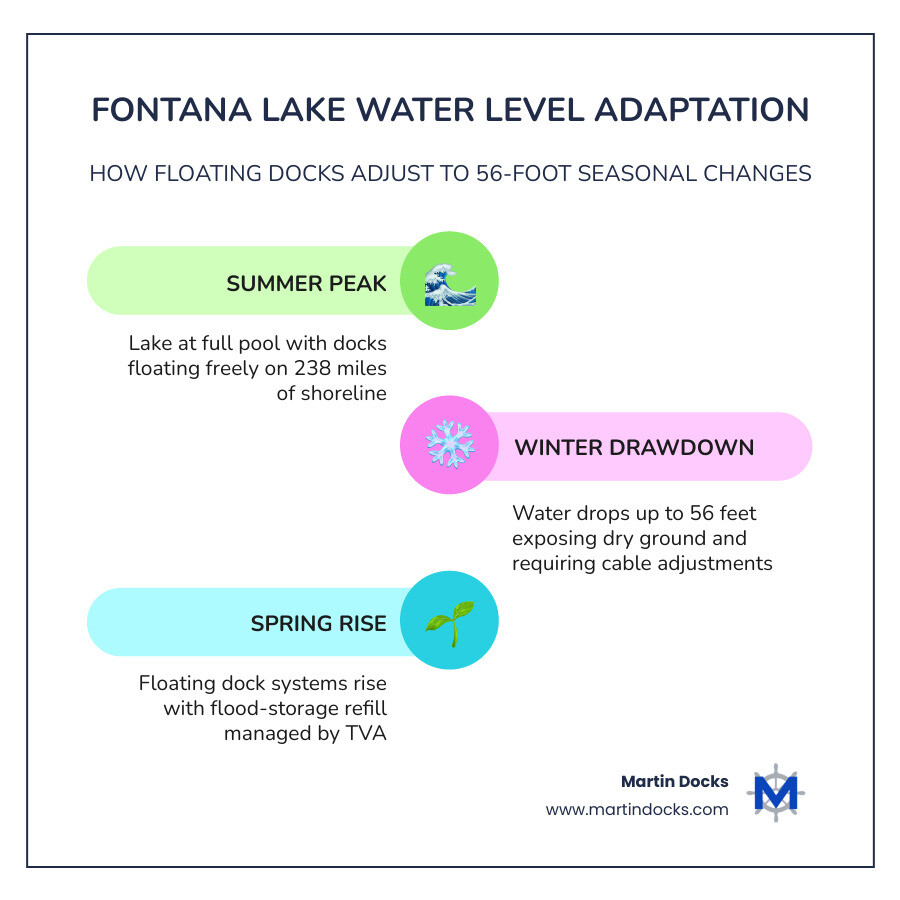
The most defining characteristic of Fontana Lake is its water level. Managed for flood control and hydroelectric power, the reservoir has a flood-storage capacity of 514,000 acre-feet. In a year with normal rainfall, the water level varies about 56 feet from summer peak to winter low. This means a fixed dock is practically impossible for most residential properties.
Floating dock systems are the only viable solution. These docks are designed to rise and fall with the water, but they require sophisticated anchoring systems. We use heavy-duty anchor cables and, in some cases, telescopic pilings to ensure the dock stays in place regardless of the depth. This level of complexity is why homeowners seek out Gainesville Floating Dock Experts who have the equipment and experience to handle deep-water installations.
When the water levels drop, the “shoreline” can move hundreds of feet away from your summer bank. This requires a dock that can be “chased” out into deeper water. Local marinas, such as the Fontana Village | Fontana Lake Marina | Official Site , deal with these same challenges on a larger scale, highlighting the importance of professional marine construction that prioritizes mobility and structural integrity.
The mountain climate of Lake Fontana—characterized by high humidity, intense summer sun, and freezing winter temperatures—is tough on building materials. Choosing the right components during the construction phase will save you thousands of dollars in maintenance down the road.
| Feature | Aluminum Docks | Steel Docks | Wood Docks | ||||||||||||||||||||||||||||||||||||||||||||||||||||||||||||||||||||||||||||||||||||||||||||||||
|---|---|---|---|---|---|---|---|---|---|---|---|---|---|---|---|---|---|---|---|---|---|---|---|---|---|---|---|---|---|---|---|---|---|---|---|---|---|---|---|---|---|---|---|---|---|---|---|---|---|---|---|---|---|---|---|---|---|---|---|---|---|---|---|---|---|---|---|---|---|---|---|---|---|---|---|---|---|---|---|---|---|---|---|---|---|---|---|---|---|---|---|---|---|---|---|---|---|---|---|
| Corrosion Resistance | Excellent (Natural Oxide Layer) | Poor (Needs Constant Painting) | Moderate (Subject to Rot) | ||||||||||||||||||||||||||||||||||||||||||||||||||||||||||||||||||||||||||||||||||||||||||||||||
| Maintenance Level | Very Low | High | High | ||||||||||||||||||||||||||||||||||||||||||||||||||||||||||||||||||||||||||||||||||||||||||||||||
| Weight | Lightweight (Easier to Move) | Very Heavy | Moderate | ||||||||||||||||||||||||||||||||||||||||||||||||||||||||||||||||||||||||||||||||||||||||||||||||
| Lifespan | 30-50+ Years | 15-25 Years | 10-15 Years | ||||||||||||||||||||||||||||||||||||||||||||||||||||||||||||||||||||||||||||||||||||||||||||||||
| Eco-Friendliness | Recyclable | Recyclable | Chemical Treatments | ||||||||||||||||||||||||||||||||||||||||||||||||||||||||||||||||||||||||||||||||||||||||||||||||
For decking, we highly recommend composite materials or specialized aluminum decking. These won’t splinter, rot, or require annual staining. Additionally, shoreline stability is a major concern on Fontana. As the water level fluctuates, the exposed banks are susceptible to erosion. Implementing a Riprap Design—using strategically placed stones to arm the shoreline—is the best way to protect your property investment. Our experience as Lake Chatuge Dock Builders has taught us that erosion control is just as important as the dock itself.
A dock on Lake Fontana isn’t complete without a way to protect your watercraft. Because the water is constantly moving, leaving a boat tied to the side of a dock can lead to hull damage from wind and waves. Hydro-pneumatic boat lifts are the preferred choice here; they use air to lift the boat completely out of the water, protecting it from algae growth and osmotic blistering.
For those with personal watercraft, a Double Floating Jet Ski Dock for Sale offers a convenient drive-on, drive-off solution that stays level with your main dock. These ports are rugged and require almost zero maintenance.
You can’t just build whatever you want on Lake Fontana. The Tennessee Valley Authority (TVA) has strict Shoreline Management Policies to protect the natural beauty and water quality of the reservoir. Navigating these regulations can be a headache for homeowners, which is why we provide full permitting assistance.
There are many 5 Common Myths About Lake Blue Ridge Boat Dock Builders and TVA-managed lakes, specifically regarding what is allowed. For instance, there are limits on the square footage of your dock, the type of flotation allowed (it must be encapsulated to prevent foam breakdown), and how far your dock can extend into the water. We handle the paperwork and the communication with TVA officials to ensure your project is compliant from day one.
The cost of a dock on Fontana is influenced by several factors. Because the shorelines are often steep, you may need a longer, more robust gangway, which adds to the price. Material choice—such as opting for premium aluminum over wood—will increase the initial investment but lower the long-term cost of ownership. Slip configuration (single vs. double) and the addition of features like sundeck roofs or boat lifts also play a role. Generally, a custom aluminum floating dock on Fontana is a significant investment that reflects the engineering required to handle the lake’s 56-foot water level swings.
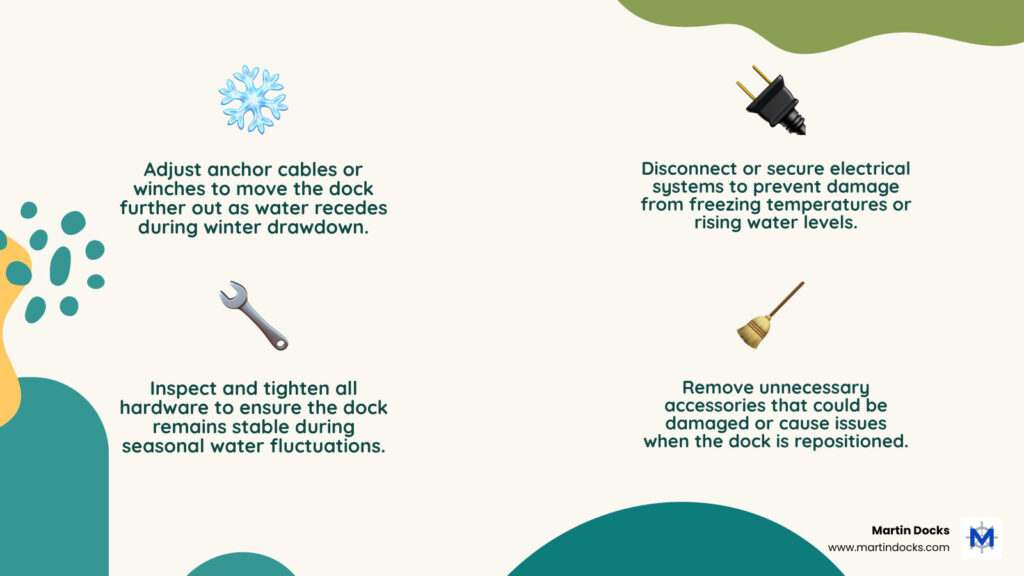
Preparation is vital for the health of your dock. As the TVA begins the seasonal drawdown, you must “chase the water.” This involves adjusting your anchor cables or winches to move the dock further out into the lake so it doesn’t get stranded on the mud or rocks. You should also remove any unnecessary accessories, secure or disconnect electrical systems to prevent damage from freezing or rising water, and ensure all hardware is tight.
Fixed docks (docks on permanent pilings) are designed for lakes with stable water levels. On Fontana, a fixed dock would be underwater during the summer and 50 feet in the air during the winter. A floating dock provides a constant, level transition from the dock to your boat. Given the 480-foot height of the dam and the lake’s massive flood-storage capacity, the structural flexibility of a floating system is the only way to ensure year-round access to the water.
Building on Lake Fontana requires a specialized set of skills that only come with decades of experience in the North Georgia and Western North Carolina mountains. At Martin Docks, we bring generations of expertise—dating back to 1956—to every project we undertake. We don’t just build docks; we build lasting connections to the lake lifestyle.
Whether you are looking for a brand-new custom aluminum solution, need a professional “Dock Watch” service to manage those 56-foot water level swings, or require expert erosion control to save your shoreline, we are here to help. Our team understands the TVA regulations, the mountain climate, and the unique engineering challenges of Fontana Lake.
Ready to start your project? Contact our team for a custom Lake Fontana dock quote and let us help you make the most of your waterfront property.